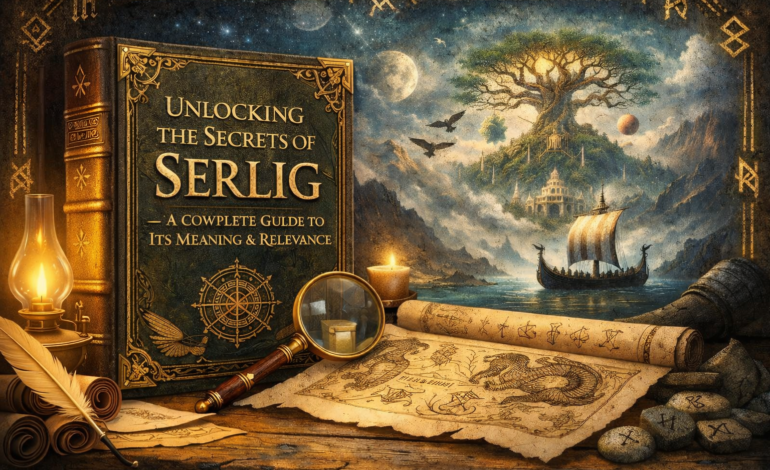
Unlocking the Secrets of Serlig: A Complete Guide to Its Meaning & Relevance

Intorduction
At Bless News, we love stories that feel bigger than ordinary maps. Serlig is one of those places. It’s a mythical land shaped by ancient memory, living magic, and landscapes that seem to carry their own voices. People who “visit” Serlig in imagination, storytelling, or worldbuilding often say the same thing: this realm feels real because it has rules, culture, and history that breathe.
Serlig isn’t only about stunning scenery. It’s about atmosphere. It’s the sensation that a forest can listen, that stones can remember, and that old legends might still leave footprints. In Serlig, markets feel lively and warm, yet a short walk away, you can find silent paths where the air turns cool for no obvious reason.
What Makes Serlig Feel So Different
Serlig feels different because it is designed around connection. The people, the land, the seasons, and the stories all influence each other. In many fantasy worlds, history is just a timeline. In Serlig, history is treated like a living presence. Locals don’t speak of the past as something that ended. They talk of it as something still nearby.
A famous Serlig concept is land-sense. Land-sense means noticing the mood of a place and behaving in a way that matches it. A loud, careless traveler might feel uncomfortable on certain roads, while a respectful traveler may feel strangely calm, as if the path is helping them. Serlig culture teaches that places can “accept” you or “resist” you depending on your intention.
This belief changes how people travel. Instead of rushing, you learn to listen. Instead of taking, you learn to ask. Serlig becomes less like a background and more like a companion. That’s why Serlig stays in the mind even after the journey ends.
The Biggest Mystery in Serlig: The Vanishing of the Serlignites
The greatest mystery of Serlig is the story of the Serlignites. The Serlignites are described in old tales as a people who understood nature’s energy deeply. They did not treat forests like resources to be consumed. They treated forests like partners. They did not fight rivers. They built alongside rivers and respected the way water wanted to move.
This philosophy is often called the Harmony Craft in Serlig lore. Harmony Craft means shaping life without damaging balance. It is not a weakness. It is a skill. Serlignites were said to create shelters, paths, and tools that worked with natural cycles instead of against them.
Then, the story breaks. The Serlignites disappear. There is no universal explanation. Some traditions claim they left Serlig to follow a sign in the sky. Others suggest they hid their knowledge to keep it away from the greedy. A few stories even say they became part of the land itself, turning into “quiet guardians” woven into stone and root.
Because there is no final answer, the mystery stays alive. And Serlig continues to call curious minds.
Echo-Weight: When the Past Feels Close
In Serlig, people use the term Echo-Weight to describe places where the past feels unusually present. Visitors sometimes report that certain ruins make the air feel heavy, or that silence becomes strangely deep. It’s not always frightening. Sometimes it feels peaceful. Sometimes it feels emotional, like standing in a place where something important happened long ago.
Echo-Weight is treated with respect. Locals believe strong events leave impressions behind, and those impressions can be felt by anyone who pays attention. A traveler might feel sudden calm, sudden sadness, or a strange sense of being observed. In Serlig tradition, this is not superstition. It’s a sign that the land remembers.
There are also stories of “thin moments,” which are brief times when the boundary between ordinary life and deeper mystery feels lighter. Thin moments are most often associated with dusk, early dawn, and seasonal change. People say that if you stand quietly during a thin moment, you may notice details you normally miss, such as distant lights, unusual wind shifts, or soft sounds that don’t match any visible source.
The Magic of Serlig: Quiet Power With Clear Limits
Magic in Serlig is not about show. It’s about purpose. Serligans, the practitioners of magic, are respected like healers, guides, and craftmasters. Their work often supports daily life, community health, and emotional balance. Serlig magic feels believable because it is woven into routine instead of isolated in rare “big scenes.”
A common belief in Serlig is that magic must never break harmony. Many communities teach what some call the Three Quiet Laws. These laws say magic should not damage the land, should not steal choice from another person, and should be repaid through effort, gratitude, or restoration. Even when not spoken aloud, these values shape what people consider “good magic.”
Because of these ideas, Serlig magic often appears as small actions with meaning. A doorframe might carry a protective symbol. A traveler might receive a charm for safe roads. A household might whisper a vow-word before a difficult journey. In Serlig, words are treated as tools. People believe language can align intention, and intention can shape outcomes.
Serlig Practitioners and Regional Magic Traditions
Serlig is not one culture with one magical style. Each region shapes the kind of magic people practice. That difference adds depth, because it makes Serlig feel like a real place with local identity.
In forest villages, herbal specialists are sometimes called Greenhands. Greenhands understand plants beyond medicine. They study which herbs calm fear, which strengthen focus, and which help sleep. Their magic is often gentle, but it can be powerful over time. Many travelers trust Greenhands for healing blends and safe-travel tokens made from bark, seed, and thread.
In coastal areas, charm-makers may be called Tidebinders. Tidebinders work with salt, shell, sea-glass, and wind symbolism. Their craft often focuses on protection and direction. Coastal communities value Tidebinders because the sea is unpredictable, and anything that offers calm and safety is treated seriously.
In mountain towns, stone-focused practitioners are often called Ridgekeepers. Ridgekeepers carve protective marks into trail stones and doorways. These markings are not always meant to be dramatic spells. They are reminders to stay grounded and alert. Some Ridgekeepers also create “stone-luck” tokens that hikers carry for endurance.
The Northern Peaks of Serlig: Where the Sky Feels Near
The northern peaks of Serlig are defined by sharp air, wide silence, and high stone ridges. Snow often lingers on the tallest mountains, and the weather can shift quickly. Travelers come here for adventure, breathtaking views, and the sense of standing in a place that has witnessed centuries.
Northern trails are known for stone markers sometimes called Sky Nails. In local storytelling, Sky Nails “anchors” the land against storms and strange shifting forces. Whether you believe that literally or symbolically, the markers create a powerful mood; they remind visitors that the north is not only nature. It is history carved into the landscape.
The north also has areas locals call Listening Hollows. These are valleys where sound seems to vanish quickly. The hush can feel intense, as if the world is holding its breath. Some travelers say they feel calmer in Listening Hollows, while others feel unsettled. Serlig culture explains this as land-sense in action. The place reflects your inner state to you.
The Great Greenwoods: Forest Roads and Hidden Memory
Serlig’s central forests, often called the Great Greenwoods, feel like the realm’s heartbeat. Trees grow thick, light turns soft under the canopy, and streams cut secret routes through moss and roots. Many people say this is where Serlig feels most alive.
Forest communities treat the woods with respect. They talk about Listening Hours, moments at dawn or dusk when the forest becomes unusually quiet. During Listening Hours, people avoid shouting, avoid careless noise, and keep their movements calm. The belief is that the woods become more “aware” at those times, and respectful travelers are less likely to get lost.
The Greenwoods are also tied to Serlignite mysteries. Some old stones carry symbols that don’t match modern writing. Some ruins feel half-hidden, as if the forest is protecting them. Travelers sometimes report faint glows in deep shade, especially when mist rises. Whether those reports are magic or imagination, they add to the Greenwoods’ reputation as a place where legends feel close enough to touch.
The Serlig Coast: Salt Air, Quiet Villages, and Sea-Memory
Serlig’s coast offers a calmer side of the realm. Beaches can be gentle and wide, while rocky shores hide coves where waves echo differently. Many visitors choose the coast when they want reflection, rest, and slow exploration.
Tides, fishing, and long-held sea lore shape coastal villages. A common coastal phrase is Sea-Memory, the belief that the ocean carries stories from far away and returns them through storms, driftwood, and changing currents. Even if you don’t take it literally, it’s a beautiful way to explain how coastal culture stays connected to the wider world.
Along the shore, people sometimes point out patterns carved into rocks by water over many years. Locals call these Salt Scripts. Salt Scripts are not always treated as real writing. They are treated as reminders that time shapes everything. In Serlig, the sea is a teacher. It shows patience, change, and the truth that nothing stays the same.
Inland Serlig: Craft, Food, and the Warm Center of Culture
Inland Serlig is where many travelers feel most welcomed. This region is filled with farms, small villages, and roads scented with bread, smoke, and herbs. Life moves steadily. People know their neighbors. Stories travel fast, and kindness is remembered.
A well-known inland tradition is the Circle Market. In a Circle Market, trade, music, and storytelling happen together. Vendors sell cloth, carved wood, herbal bundles, and simple jewelry. Musicians play near the center, and community announcements often occur between songs. The market becomes more than shopping. It becomes a social heart.
Inland villages are also famous for Name-Gifting. If a traveler stays long enough or helps the community, locals may give them a nickname tied to a moment, a personality trait, or a funny event. In Serlig, names are not casual. Names are memory. Receiving a gifted name is a sign that the village has placed you into its story.
Creatures of Serlig: Legends That Shape Identity
Serlig is full of life, and its creatures are part of how the realm teaches meaning. Some animals are ordinary but given symbolic roles. Others are legendary beings that appear in stories so often they feel almost real.
The most famous mythical creature is the Lumivix. The Lumivix is described as a twilight-glowing guide that appears when travelers are lost. Some describe it as winged, others as a floating light shaped like a small fox or bird. In most tales, it does not speak. It simply leads. The Lumivix represents hope, direction, and the idea that Serlig protects respectful travelers.
Another well-known figure is the Fynar fox. Fynar stories focus on cleverness and character-testing. In many tales, the fox rewards kindness and exposes greed. The fox is not portrayed as purely good or bad. It is portrayed as a mirror that reflects a traveler’s true nature. In Serlig storytelling, the Fynar fox does not “judge” with words. It judges with outcomes. If a person moves through the woods with respect, the path seems to open. If a person acts selfishly, the forest feels confusing, and the journey becomes harder. That is why the Fynar fox is so popular in Serlig culture. It turns a simple animal into a lesson about attitude and intention.
Serligian Birds and Animal
Serligian rabbits also appear often in local tales, but their role is gentler. They are linked with luck, safe returns, and new beginnings. Many villagers believe spotting a rabbit near a road is a good sign, especially before a long trip. Some families even keep small rabbit symbols near doorways as reminders to travel lightly and stay humble. These traditions may sound small, but they are part of what gives Serlig its deep cultural texture.
There are also stories of night-birds that sing only during thin moments, when Echo-Weight feels strongest. Some people call these birds “Hushwings” because their sound is soft and slow, like a lullaby meant for the land itself. Whether Hushwings are real creatures or poetic folklore depends on who you ask, but their presence in storytelling helps describe an important Serlig idea: silence can carry meaning.
Serlig’s creature lore works because it connects myth with daily life. A traveler doesn’t need to fight monsters to feel adventure here. Sometimes, noticing a small sign, hearing a story, or seeing an unusual glow at dusk is enough to make the experience feel magical. In Serlig, wonder is often quiet, which is why it feels believable.
Serlig Festivals: Where Community and Magic Meet
Festivals in Serlig are not random celebrations. They are cultural anchors that keep community identity strong. Serlig people believe seasons are not just weather changes. They are living phases of the land, and each phase deserves respect. This is why festival life in Serlig feels meaningful, not decorative.
Spring festivals in Serlig often focus on renewal and “soft beginnings.” Villagers clean homes, decorate entrances with fresh greens, and share meals meant to wake the body after winter. In many towns, this season is also tied to learning, so younger people are taught skills like herb-handling, craft basics, and simple vow-words for safe travel and honest work.
Summer celebrations are brighter and more social. Music becomes louder, markets stay open longer, and gatherings are often held near rivers or open fields. Summer in Serlig is associated with courage and movement, which is why many travelers prefer exploring during this time. Roads feel friendly, and communities welcome visitors who bring good stories and polite manners.
Harvest festivals Traditions
Harvest festivals are among the most emotional traditions in Serlig. They combine gratitude, feasting, and remembrance. People tell family histories, honor elders, and share stories about difficult seasons they overcame together. Harvest gatherings often include gift exchanges of small crafts, herbs, or tokens meant to carry protection into the colder months.
Winter ceremonies are quieter and more protective. Communities gather around hearth fires and share long storytelling nights. Winter is also when vow-words become most important, because Serlig culture believes words guide actions most strongly when the world feels uncertain. Winter traditions remind people that warmth is not only about temperature. It is a connection.
Foods, Crafts, and the Everyday Culture of Serlig
Serlig culture is best understood through everyday life. Food, craft, and hospitality are not side details here. They are the foundation of how communities stay close. A visitor who learns Serlig customs through meals will often understand the land faster than a visitor who only chases mysteries.
Markets in Serlig are full of scents and colors. You might find herb-breads cooling on cloth, jars of preserved berries, and warm drinks brewed from local plants. Many recipes are tied to seasons, and families take pride in small variations that make their village unique. In Serlig, food is memory. A meal is often served with a story about where the recipe came from and why it matters.
Craftwork is also central. Woven cloth, carved wood, small charm jewelry, and herb bundles are common across regions. Crafts often carry symbolic meaning, even when they are practical. A woven pattern might represent safe roads. A carved symbol might represent endurance. These details make Serlig feel like a living culture instead of a fantasy backdrop.
Hospitality in Serlig is warm but respectful. Visitors are welcomed, but manners matter. Greeting people kindly, listening patiently, and asking permission when unsure are considered signs of good character. Serlig communities value humility because humility keeps harmony, and harmony is the deepest value in the realm.
Traveling Through Serlig: What Visitors Should Know
Serlig rewards slow travel. People who rush often miss its best moments. The land is full of small details that become meaningful only when you give them time. A quiet path at dawn, a story shared during a meal, or a sudden shift in wind near an old stone can become a highlight of a journey.
Permission is important in Serlig, especially near sacred sites, rituals, and ruins connected to the Serlignites. Some places are open to visitors, and some are treated as sensitive. Asking before entering or photographing is not only polite. It is part of how you show land-sense. Many locals become more open and generous when they see a traveler who respects boundaries.
Guides can also change the experience. In Serlig culture, a guide is not only someone who knows roads. A guide is someone who knows stories. Travelers often hire local guides not because they are afraid, but because a guide helps them understand what they are seeing. In Serlig, understanding is part of the adventure.
The best advice for Serlig travel is simple: behave like a guest, not an owner. Serlig is a realm that opens gently. The more thoughtfully you approach Serlig, the more of its hidden wonders it chooses to share.
Serlig has many locations, but certain types of places appear again and again in traveler stories. Old stone sites linked to Echo-Weight are popular, especially those hidden just beyond forest trails. People often describe these places as calm but intense, like standing near a truth you cannot fully name.
Circle Markets are also must-visit cultural experiences. They show how Serlig communities trade, share news, and keep storytelling alive. A traveler who spends time in a Circle Market will understand Serlig values quickly. You learn that craft and community matter more than speed and status.
Coastal coves are another favorite. They offer beauty and peace, and they also carry legends of Sea-Memory and Salt Scripts. Watching sunset on the Serlig shore is often described as a quiet, emotional moment, as if the world becomes simpler and deeper at the same time.
In the northern peaks, travelers often search for Sky Nails and Listening Hollows. These locations offer dramatic landscapes and the strongest sense of ancient presence. Even if you find no supernatural proof, the north can make you feel small in the best way, like your worries are lighter in mountain air.
Why Serlig Stays With You After You Leave
Serlig stays in the mind because it offers wonder without shouting. It gives mystery through the Serlignites, warmth through village culture, and beauty through landscapes that feel emotionally alive. Serlig does not demand belief. It invites curiosity. That invitation is what makes it powerful.
Many travelers remember the sound of markets and the smell of herbs. They recognize the hush of forests and the sea’s voice along rocky shores. They remember Echo-Weight near old stones and the sense of land-sense on quiet paths. These memories feel personal because
Serlig is built on connection, not just spectacle.
At Bless News, we see Serlig as a reminder that the strongest worlds are those where culture, nature, and story support each other. Serlig feels complete because it has ethics, traditions, and everyday details. You can imagine people living there, not just adventuring there.
If you want a realm that feels deep, welcoming, and endlessly explorable, Serlig is a journey worth taking. Even when the trip ends, the story keeps walking beside you.