
Dobutane: Medical Uses, Pharmacological Effects, and Clinical Applications

Dobutane Overview
Dobutamine is a key cardiovascular drug used to manage acute heart conditions. As a synthetic catecholamine, it helps improve cardiac output in patients with heart issues. Its quick action and targeted effects make it vital in emergency rooms, cardiology, and intensive care units globally.
Often confused with “dobutane,” the correct name is dobutamine. This medication stimulates the heart effectively without causing excessive heart rate increases or systemic vascular resistance when used correctly.
What Is Dobutane?
Dobutane is a beta-1 adrenergic receptor agonist that boosts heart muscle performance. It was created for patients with acute heart failure or cardiogenic shock. Unlike other inotropic agents, dobutamine focuses mainly on the heart muscle, making it essential for urgent situations needing better pumping efficiency.
It is given intravenously and requires continuous cardiac monitoring. Its short half-life allows doctors to quickly adjust doses based on how the patient responds, enhancing safety in critical care.
Dobutamine Chemical Formula and Structural Composition
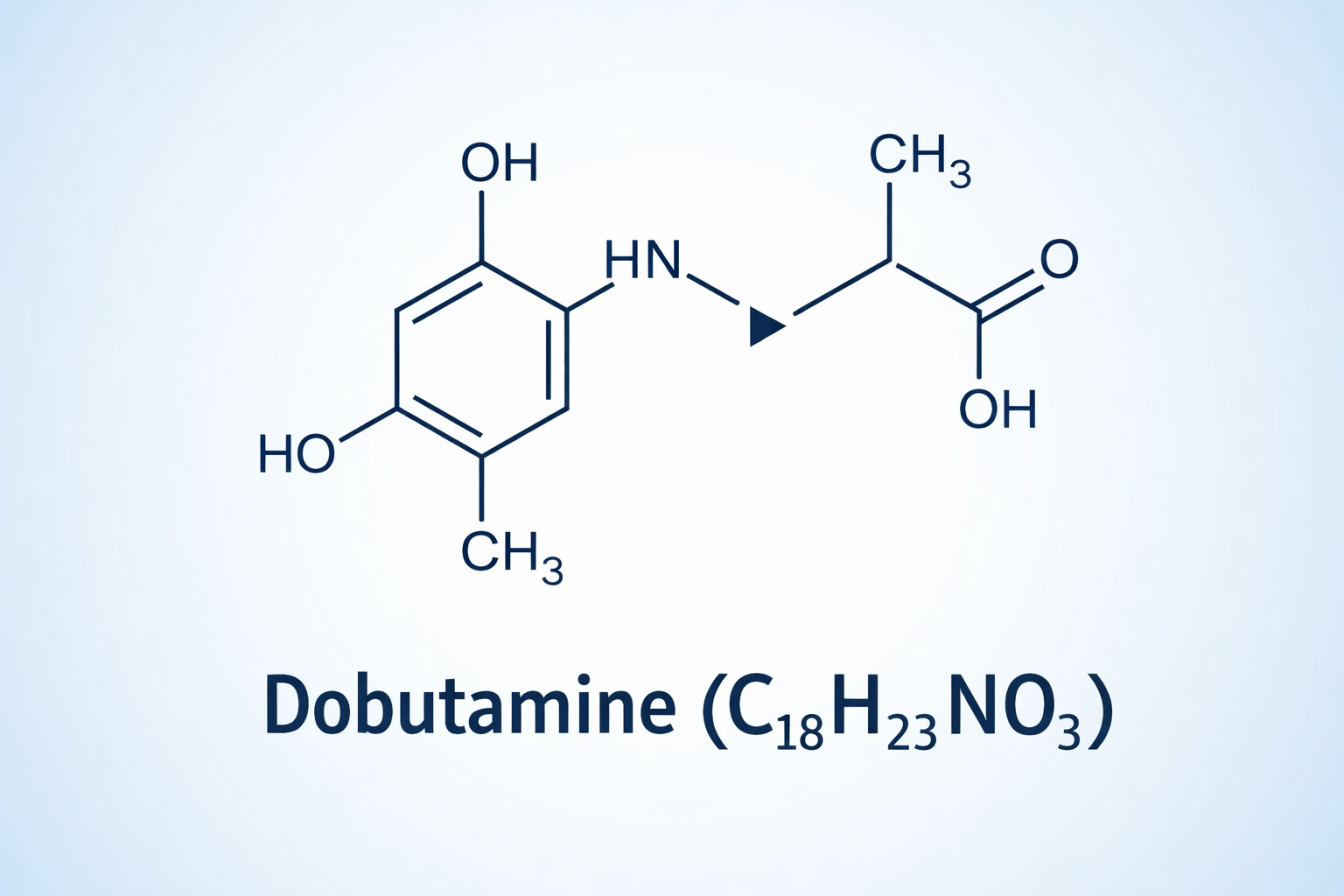
Dobutamine is a synthetic catecholamine. Its molecular formula is C₁₈H₂₃NO₃. It contains 18 carbon atoms, 23 hydrogen atoms, 1 nitrogen atom, and 3 oxygen atoms. The structure has an aromatic benzene ring. It includes hydroxyl groups and a nitrogen side chain. This setup enables dobutamine to bind accurately to beta-1 adrenergic receptors in the heart.
The arrangement of these atoms is key to dobutamine’s inotropic activity. It boosts heart muscle contractions and raises cardiac output. Plus, it has little impact on peripheral blood vessels.
Here’s the Dobutamine (Dobutane) molecular composition:
- Carbon (C): 18 atoms
- Hydrogen (H): 23 atoms
- Nitrogen (N): 1 atom
- Oxygen (O): 3 atoms
How Dobutamine Works
Dobutamine selectively stimulates beta-1 adrenergic receptors in the heart. This activation raises cyclic adenosine monophosphate (cAMP) levels in heart cells, allowing more calcium in. As a result, contractions strengthen, increasing stroke volume and cardiac output.
At therapeutic doses, Dobutane has little impact on alpha receptors, preventing significant vasoconstriction. It may slightly activate beta-2 receptors, causing mild vasodilation. This helps reduce afterload, improving heart performance without stressing the circulatory system.
Medical Uses of Dobutane
Dobutane is mainly used for acute heart failure, where the heart struggles to pump enough blood. It’s also vital in cardiogenic shock, a severe condition often occurring after a heart attack, where swift cardiac output restoration is crucial.
In cardiology, Dobutane aids in dobutamine stress echocardiography. For patients unable to exercise, it simulates physical activity by increasing heart workload. This helps assess heart viability, detect ischemia, and evaluate coronary artery disease through imaging.
Additionally, dobutamine supports heart function in post-surgery patients and in some cases of septic shock with myocardial depression.
Pharmaceutical and Clinical Applications
Dobutane is provided as a sterile injectable solution for intravenous use. It’s usually diluted in compatible IV fluids and delivered via infusion pumps for precise dosing. Due to its potency, it’s restricted to hospital settings and administered by trained staff.
Dosing is tailored to individual patient needs, based on blood pressure, heart rate, urine output, and cardiac output. Continuous ECG monitoring is advised to catch any arrhythmias early.
Dobutamine is also used in research to study heart function and assess new diagnostic techniques.
Therapeutic Effects and Benefits
The main benefit of dobutamine is its ability to increase cardiac output without significantly raising heart rate. This is especially helpful for patients who cannot handle tachycardia. Better cardiac output leads to improved tissue perfusion, oxygen delivery, and organ function.
Patients using Dobutane often feel relief from symptoms like shortness of breath, fatigue, and low blood pressure related to heart failure. In critical situations, these improvements can be lifesaving.
Side Effects and Adverse Reactions
Like other potent cardiovascular drugs, dobutamine can cause side effects if not monitored closely. Common issues include increased heart rate, higher blood pressure, and palpitations. Some patients might experience headaches, nausea, or chest discomfort during treatment.
Serious side effects, like arrhythmias or excessive myocardial oxygen demand, can occur at higher doses or in patients with heart instability. Thus, dobutamine therapy needs careful supervision and is usually avoided in some obstructive cardiomyopathy.
Contraindications and Precautions
Dobutamine should be used cautiously in patients with existing arrhythmias, severe hypertension, or sensitivity to catecholamines. In those with ischemic heart disease, excessive doses can worsen myocardial ischemia by increasing oxygen demand.
Drug interactions may happen with beta-blockers, monoamine oxidase inhibitors, or other heart-affected medications. A detailed medication review is essential before starting treatment.
Role of Dobutamine in Modern Medicine
Dobutamine is a cornerstone in acute cardiac care due to its reliability and fast action. Even with newer drugs available, its importance remains, especially in emergency cardiology and diagnostic imaging.
Advancements in monitoring and dosing have further enhanced its safety and effectiveness. Ongoing research continues to find better ways to use it in critical care, heart failure management, and advanced diagnostics.
Future Perspectives and Research
Research is now focused on improving patient selection, reducing side effects, and combining dobutamine therapy with advanced monitoring systems. There’s growing interest in using it alongside mechanical circulatory devices for comprehensive heart failure management.
As cardiovascular diseases rise globally, Dobutane will likely stay a vital medication, especially in acute care and diagnostic cardiology.
Conclusion
Dobutane is a vital medication in cardiovascular care. It boosts heart function quickly, making it a top choice for acute heart failure, cardiogenic shock, and stress testing. When used correctly and under medical supervision, it provides significant benefits while keeping safety concerns manageable. Its ongoing use shows its key role in today’s and future heart care.