Speciering Explained: How New Species Evolve and Adapt Over Time

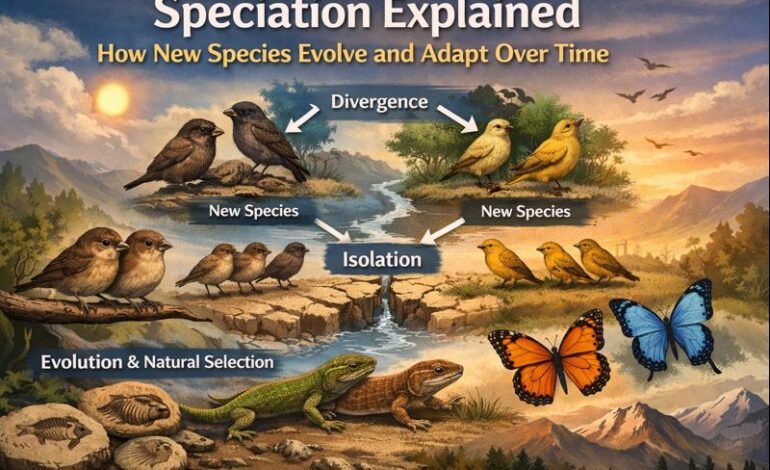
Speciering is the natural evolutionary process through which new species emerge from existing populations. It occurs when genetic variations accumulate over generations, leading to reproductive isolation and the development of distinct traits. Driven by natural selection, environmental pressures, and behavioral adaptations, Speciering explains the remarkable diversity of life on Earth.
Overview
Have you ever wondered how the incredible variety of life on Earth came to exist? From the vibrant colors of tropical birds to the resilient plants thriving in deserts, every living organism tells a story of adaptation and survival. At the heart of these stories is Speciering—the fascinating process by which new species arise from existing ones. Understanding Speciering helps us unravel how life diversifies, evolves, and adapts over time, revealing the delicate balance between survival and change that shapes ecosystems worldwide.
What Is Speciering?
Speciering is the evolutionary process through which populations of a species gradually transform into distinct new species. It occurs when groups of the same species become reproductively isolated, meaning they no longer interbreed successfully. Over generations, genetic changes accumulate, resulting in unique adaptations that define a new species.
Speciation can occur in various ways. Geographic separation, for instance, may isolate populations on different islands or mountain ranges, exposing them to unique environmental pressures. Even within the same habitat, differences in behavior, diet, or mating preferences can lead to Speciation, as populations diverge to occupy distinct ecological niches.
At its core, Speciation is about change over time—how organisms respond to environmental pressures, survive challenges, and adapt in ways that gradually transform them into something new.
The Role of Natural Selection in Speciering
Speciation is closely linked to natural selection, the principle that drives adaptation in species. Individuals with traits that help them survive or have more offspring are more likely to pass those traits on to their children. Over time, these small advantages accumulate, leading to significant evolutionary changes.
For example, during the Industrial Revolution in England, the peppered moth changed coloration from light to dark, helping it blend with soot-covered trees and avoid predators. Similarly, the giraffe’s long neck allows it to reach high foliage inaccessible to other herbivores. These adaptations demonstrate the role of natural selection in shaping species and setting the stage for Speciering to occur.
Factors That Influence Speciering
The process of Speciering is influenced by a combination of environmental, genetic, and behavioral factors:
Geographic isolation: Physical barriers like rivers, mountains, or oceans prevent populations from interbreeding.
Environmental pressures: Different habitats impose unique survival challenges, prompting populations to adapt.
Genetic variation: Populations with diverse genes are more likely to develop advantageous traits.
Behavioral changes: Differences in mating rituals or feeding patterns can prevent interbreeding.
Human impact: Urbanization, deforestation, and climate change alter habitats, accelerating or disrupting natural Speciation processes.
Understanding these factors provides insight into how life continuously adapts and evolves in response to changing conditions.
Types of Speciering
Speciering can occur through several mechanisms, each contributing to biodiversity in unique ways.
| Type | Description | Example |
|---|---|---|
| Allopatric | Populations are separated geographically and evolve independently. | Island species diverging from mainland ancestors. |
| Sympatric | Populations diverge in the same habitat due to ecological or behavioral differences. | Cichlid fish in the same lake adapting to different diets. |
| Peripatric | Small, isolated populations at the edge of a larger population evolve rapidly. | Polar species adapting on fragmented ice sheets. |
| Parapatric | Adjacent populations develop differences due to environmental gradients. | Grass species along contaminated vs uncontaminated soils. |
| Hybridization / Polyploidy | Rare events where crossbreeding or chromosome doubling create new species, common in plants. | Wheat species evolving through polyploidy. |
Examples of Speciation in Nature
Speciering is visible in both subtle and dramatic ways. The Arctic fox changes coat color seasonally, blending into snow in winter and tundra in summer. The octopus can shift color and texture almost instantly, adapting for camouflage or hunting. Over many generations, these adaptations may eventually lead to distinct lineages if populations become isolated or experience different selection pressures.
Even humans indirectly influence Speciation. Urban environments, climate change, and habitat fragmentation create new selective pressures, encouraging populations to adapt in novel ways. Studying these modern changes offers insights into how Speciation continues to shape life on Earth today.
Studying and Observing
Scientists study Speciering using multiple approaches, including genetic analysis, fossil records, and ecological observation. Genetic sequencing reveals how populations diverge at the molecular level, while field studies show behavioral adaptations and reproductive changes in real time. Remote sensing and tracking technologies allow researchers to monitor habitats and population dynamics without disturbing natural behavior.
Collaboration between biologists, ecologists, and conservationists is crucial for understanding Speciering. By combining data from genetics, fieldwork, and environmental monitoring, scientists can uncover the intricate processes driving the emergence of new species.
The Future of Species Evolution
Speciation is not a historical phenomenon—it is ongoing. Climate change, human activities, and habitat modification continually create new selective pressures, shaping how species evolve. Understanding Speciation helps us predict which species are likely to adapt and which may face extinction.
Conservation efforts are essential to allow natural Speciation to occur. Preserving diverse habitats ensures populations have the space and resources to adapt, maintaining biodiversity and ecological balance. Technological advances, such as genetic monitoring and AI-driven ecological modeling, are helping scientists track and understand Speciering in real time, giving hope for preserving life’s diversity for generations to come.
Conclusion
Speciering is a window into the dynamic, evolving story of life on Earth. Through adaptation, natural selection, and environmental interaction, species transform over generations, creating the rich tapestry of biodiversity we see today. From small genetic changes to dramatic ecological adaptations, Speciation highlights life’s resilience and creativity. By studying and protecting the processes that allow Speciation to continue, we can ensure that Earth remains a thriving home for countless unique species well into the future.