What Is SOA OS23? A Game-Changing Tech Insights

Introduction
In the ever-evolving world of tech, staying ahead of the curve is crucial. Enter SOA OS23, a term that has recently been making waves in the industry. Whether you’re a developer, IT professional, or just a tech enthusiast, understanding the intricacies of SOA-OS23 can give you a competitive edge. But what exactly is SOA OS23? How does it impact modern systems, and why is it relevant for 2025? In this comprehensive guide, Bless News walk you through all the essential details, from its features and use cases to its technical criteria, all while keeping the language simple, engaging, and to the point.
What is SOA OS23?
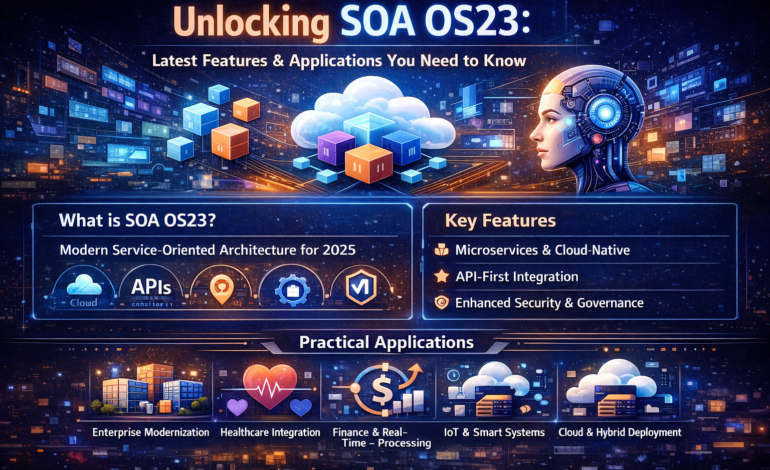
SOA OS23 refers to the latest iteration of the Service-Oriented Architecture (SOA) platform, version OS23. It’s a system architecture designed to enable seamless integration and interoperability among various software applications and services. With its roots in SOA, OS23 builds upon previous versions to enhance scalability, flexibility, and security in enterprise-level systems.
Key Features:
Scalability: OS23 is designed to handle large-scale systems, making it ideal for businesses that need to manage a high volume of transactions or data.
Interoperability: One of the key strengths of SOA-OS23 is its ability to integrate with diverse technologies and systems, making it suitable for organizations with complex infrastructures.
Security: OS23 comes with built-in security protocols that protect sensitive data and prevent unauthorized access.
Major Features of SOA OS23
SOA-OS23 is packed with robust features that make it a powerful solution for modern organizations. Here are some of its standout features:
Service Virtualization
SOA OS23 allows for virtualizing services, enabling testing and development without needing to rely on the actual service implementation. This makes testing and deployment much faster.
Dynamic Service Discovery
The platform comes with an automated service discovery mechanism that helps applications identify and communicate with each other dynamically. This ensures that services remain highly available and adaptable.
Enhanced Data Security
With built-in encryption, tokenization, and multi-factor authentication, SOA OS23 strengthens the security layer, safeguarding data transmission and storage.
API Management
OS23 provides advanced API management capabilities, allowing businesses to expose their services to external parties securely and efficiently. It includes features like rate limiting, monitoring, and throttling.
Cloud-Native Compatibility
SOA OS23 is optimized for cloud deployments, supporting containerization and microservices architectures. This makes it easier for businesses to scale their systems in the cloud and on-premise.
Event-Driven Architecture
The platform supports event-driven design patterns, allowing businesses to react to changes in real-time. It is ideal for use cases involving IoT, live data streams, or transactional systems.
Practical Applications of SOA OS23
SOA-OS23 isn’t just theoretical – it has real-world applications that solve significant challenges for businesses across various industries. Here are some practical applications:
Real-Time Data Processing
In industries such as finance and e-commerce, SOA-OS23 can be used to process and analyze data in real time. This capability allows businesses to make timely decisions based on the latest data, improving customer experience and operational efficiency.
Business Process Automation
By breaking down tasks into smaller, manageable services, SOA OS23 can be used to automate business processes like order fulfillment, invoicing, and customer service. Automation speeds up workflows and reduces errors, providing a competitive edge.
Supply Chain Management
SOA-OS23 integrates multiple systems within the supply chain, ensuring smoother communication between suppliers, manufacturers, and distributors. This integration leads to better inventory management, faster shipping, and reduced operational costs.
Customer Relationship Management (CRM)
SOA OS23 enables seamless integration between CRM systems and other customer service platforms, providing a holistic view of customer data. Businesses can use this information to deliver personalized services and improve customer satisfaction.
Healthcare Data Exchange
In the healthcare industry, SOA-OS23 can facilitate secure data sharing between hospitals, clinics, and other healthcare providers, ensuring timely and accurate information flow, which is critical for patient care.
Industry Adoption of SOA OS23
SOA OS23 has garnered attention from various industries for its ability to modernize systems and offer scalable solutions. Here’s a look at how different sectors have adopted SOA-OS23:
Banking and Financial Services
The banking sector has adopted SOA OS23 to integrate disparate financial services and legacy systems. It allows for smooth transactions between systems, secure data handling, and real-time processing. Banks also use SOA-OS23 to roll out new services without disrupting existing operations.
Telecommunications
Telecom companies use SOA-OS23 to connect their network management systems, customer billing systems, and third-party services. By doing so, they can offer unified and reliable services to their customers, while reducing operational costs.
Retail and E-commerce
Retailers and e-commerce giants have leveraged SOA OS23 to integrate various online store components, inventory management systems, payment gateways, and customer service tools. This seamless integration enhances the customer experience and streamlines business operations.
Healthcare
The healthcare sector, known for dealing with large volumes of sensitive data, has increasingly turned to SOA OS23 for secure and efficient data sharing between hospitals, insurers, and clinics. The ability to communicate seamlessly across platforms improves patient care and ensures compliance with regulations.
Government and Public Sector
SOA-OS23 is also being adopted by government agencies for data integration between various departments. It helps streamline public services, improving access to information and service delivery for citizens.
How SOA OS23 Works
The architecture behind SOA-OS23 is designed to break down complex systems into smaller, manageable services. These services are then connected and work together as a unified platform. For example, a banking system may have separate services for account management, transaction processing, and customer support, all of which communicate seamlessly via the SOA-OS23 framework.
Key components of SOA OS23 include:
Services: Modular components that perform specific tasks (e.g., payment processing, data retrieval).
Service Bus: The communication layer that allows these services to communicate with each other.
API Gateways: Facilitate secure communication between external applications and the internal services.
Criteria for Implementing SOA-OS23
When considering whether SOA-OS23 is the right fit for your organization, here are a few important criteria to keep in mind:
System Complexity: SOA-OS23 is ideal for businesses with complex systems requiring seamless integration across various platforms.
Scalability Needs: If your business is growing rapidly and you need a solution that can scale with you, SOA OS23 offers flexibility for expansion.
Budget: SOA OS23 is a robust solution, but its implementation can be resource-intensive. Ensure you have the necessary budget for development, deployment, and ongoing maintenance.
Existing Infrastructure: Assess whether your current systems are compatible with SOA-OS23. Some older systems may require significant upgrades to integrate with this platform.
Benefits of SOA OS23
Improved Efficiency: By modularizing your services, SOA-OS23 makes it easier to manage and maintain different parts of your system, improving overall operational efficiency.
Cost-Effective: Though the initial setup may be expensive, long-term costs are reduced due to easier system upgrades and reduced downtime.
Enhanced Security: With built-in security features like encryption and authentication protocols, SOA-OS23 ensures your data remains protected.
Challenges of SOA OS23
Despite its many advantages, SOA-OS23 does have some challenges:
Complex Implementation: Implementing SOA OS23 can be technically challenging and may require specialized expertise.
Resource-Intensive: Deploying this platform often requires a substantial investment in terms of both time and money.
Compatibility Issues: Some legacy systems may not be fully compatible with SOA-OS23, requiring significant rework.
Why Choose SOA OS23 in 2025?
SOA-OS23 is particularly valuable in 2025 due to the increasing demand for flexible, scalable, and secure IT solutions. As businesses continue to embrace digital transformation, the ability to integrate disparate systems and scale rapidly becomes essential. SOA OS23’s robust features, such as enhanced interoperability and security, make it an attractive choice for organizations looking to future-proof their IT infrastructure.
How to Choose the Right SOA OS23 Provider
Choosing the right provider for SOA-OS23 is critical for successful implementation. Here are some tips for selecting a trusted partner:
Experience: Look for providers with a proven track record in deploying SOA OS23 solutions.
Customization Options: Ensure that the provider can tailor the implementation to suit your organization’s unique needs.
Post-Implementation Support: Consider ongoing support services, such as troubleshooting, updates, and system maintenance.
Conclusion
SOA OS23 marks a major advancement in the development of Service-Oriented Architecture. With its improved scalability, enhanced security, and flexible integration capabilities, it’s an excellent choice for organizations looking to streamline operations and future-proof their IT systems. Whether you’re in finance, healthcare, e-commerce, or telecommunications, SOA-OS23 can help you optimize your service infrastructure for the digital age.
If you’re considering adopting SOA-OS23, make sure to evaluate your system’s requirements and consult with an experienced provider to ensure a smooth implementation.
FAQs
What is the difference between SOA-OS23 and previous versions?
SOA OS23 offers improved scalability, security, and flexibility compared to earlier versions, making it more suitable for large-scale and complex systems.
Can SOA-OS23 be integrated with legacy systems?
Yes, SOA-OS23 is designed for seamless integration with legacy systems, although some systems may require significant updates.
Is SOA-OS23 suitable for small businesses?
SOA-OS23 is generally more suited for medium to large enterprises due to its complexity and resource requirements. Smaller businesses might find it overkill unless they plan for significant growth.