Tactical Air Support Squadron Explained: Roles, Missions, and Impact

Overview of a Tactical Air Support Squadron
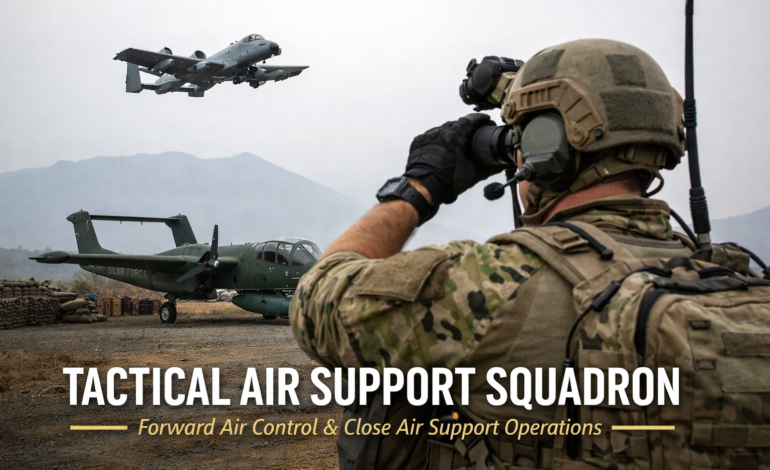
A Tactical Air Support Squadron (TASS) is a key unit in the air force. It connects frontline ground troops and air combat forces. This ensures airpower is used effectively. TASS operates light fixed-wing aircraft, helicopters, and unmanned aerial vehicles (drones), all equipped with advanced communication, surveillance, and targeting technologies.
TASS provides direct support to troops, guides airstrikes, gathers battlefield intelligence, and coordinates operations across military branches. In combat zones or training, these squadrons help maintain readiness and boost combined-arms operations.
The Primary Roles of Tactical Air Support Squadrons
Forward Air Control (FAC)
A crucial role of Tactical Air Support Squadrons is forward air control. Pilots or trained observers direct attack aircraft to enemy positions. They mark targets, share coordinates, and coordinate timing for accurate strikes. This minimizes risks to civilians and friendly forces. FAC requires pilots to understand battlefield dynamics, terrain, and troop movements, plus strong communication skills to relay real-time information.
Close Air Support (CAS)
TASS also provides close air support. This involves delivering direct air assistance to soldiers facing enemy forces. Close air support missions are complex and need precise timing and coordination with ground forces. Quick responses to urgent requests can make or break a mission. TASS integrates airpower with infantry, armored units, and artillery, ensuring ground forces receive vital support.
Reconnaissance and Intelligence Gathering
Another key function is reconnaissance and intelligence gathering. TASS uses aircraft or drones to monitor enemy movements, assess terrain, and spot potential threats. This information gives commanders real-time situational awareness, essential for planning and decision-making. It helps military units anticipate enemy actions and adjust tactics effectively.
Tactical Coordination and Communication
TASS also plays an important role in tactical coordination. They ensure that multiple aircraft operate safely in combat zones and coordinate airspace use to prevent conflicts. TASS facilitates communication among air units, ground forces, and command centers. Good coordination enables smooth mission execution, reduces friendly fire risks, and allows quick adjustments in response to battlefield changes.
Training and Operational Readiness
Training is vital for TASS operations. Pilots and crew members regularly engage in simulated combat exercises with ground and naval units. These exercises mimic real combat conditions, allowing personnel to practice forward air control, close air support, and coordination under pressure. Ongoing training ensures TASS units are ready for rapid deployment and can operate effectively in tough environments.
Aircraft, Drones, and Technology
TASS relies on various aircraft and technologies to complete missions. Light fixed-wing aircraft are used for observation and forward air control, while helicopters support troop movement, medical evacuation, and surveillance. Recently, drones have gained importance, providing safe and efficient real-time reconnaissance.
Advanced communication systems enable smooth coordination among pilots, ground troops, and command centers. This ensures quick and reliable flow of intelligence and orders. Laser designators and targeting equipment help mark targets for precision strikes, reducing collateral damage. By combining manned and unmanned systems with cutting-edge tech, TASS units maintain a strategic edge.
Importance in Modern Warfare
TASS units are increasingly vital in modern combined-arms operations. They provide real-time intelligence, enable precision airstrikes, and coordinate air and ground activities. Their ability to quickly relay information, guide aircraft, and respond to battlefield changes greatly enhances mission success.
Their work is crucial in protecting civilians and friendly forces. By guiding strikes accurately and offering continuous updates, TASS makes military actions more targeted. This efficiency helps commanders deploy troops strategically and react precisely to enemy actions.
Challenges Faced by Tactical Air Support Squadrons
Despite their effectiveness, tactical air support squadron faces many challenges. Operating in hostile airspace exposes pilots to enemy fire and increases mission risks. Coordinating multiple aircraft with ground units in real time demands exceptional communication and decision-making skills.
These squadrons depend on advanced technology, and failures in sensors, communications, or drones can jeopardize a mission. Pilots and coordinators must make split-second decisions with life-or-death stakes, all under intense pressure. Their high-stakes work requires rigorous training, discipline, and resilience.
Tactical Air Support Squadron: Roles, Assets, and Functions
| Aspect | Description |
|---|---|
| Primary Mission | Coordinate air operations with ground forces to ensure effective battlefield support |
| Core Role | Forward air control, close air support coordination, and reconnaissance |
| Operational Environment | Active combat zones, training exercises, and joint military operations |
| Aircraft Used | Light observation aircraft, tactical helicopters, unmanned aerial vehicles (UAVs) |
| Key Capabilities | Real-time intelligence gathering, target identification, air strike guidance |
| Ground Coordination | Works closely with infantry, armored units, and command centers |
| Communication Systems | Secure radio networks, satellite links, battlefield data systems |
| Strategic Importance | Enhances precision, reduces friendly-fire risks, improves mission success |
| Modern Enhancements | Drone integration, AI-assisted surveillance, digital command platforms |
| Typical Command Structure | Squadron-level command integrated with higher air and ground leadership |
The Future of Tactical Air Support Squadrons
Looking ahead, TASS roles are evolving with emerging technologies. Artificial intelligence (AI) is being integrated into targeting, reconnaissance, and decision-making, enabling faster and more accurate missions. Advanced drones are taking on complex surveillance and strike tasks, lowering risks for human pilots.
Improvements in communication networks allow better coordination between air and ground units, even in complex or electronic-warfare-heavy environments. As these technologies advance, TASS will become even more capable and essential to modern military operations.
Tactical Air Support Squadron Profiles
The United States Air Force has operated many Tactical Air Support Squadrons. Each squadron has its own mission, aircraft, and history. These units are vital for forward air control. They also provide battlefield intelligence and coordinate air-ground operations.
19th Tactical Air Support Squadrons
The 19th TASS guides strike aircraft to enemy targets. This ensures ground forces get precise air support. The squadron uses light observation aircraft and helicopters. They focus on real-time coordination during combat and training.
20th TASS units
The 20th TASS specializes in air-ground integration. It provides commanders with timely intelligence. Historically, it has used Cessna O-2 Skymasters and similar aircraft, maintaining mobility and precision.
21st TASS units
The 21st TASS concentrates on directing air operations and providing close air support to ground forces. It connects ground commanders with attacking aircraft, ensuring coordinated strikes. Its aircraft include helicopters and light reconnaissance planes for quick deployment.
22nd TASS units
The 22nd TASS excels in reconnaissance, surveillance, and tactical guidance. It operates both fixed-wing aircraft and helicopters to give commanders actionable intelligence.
23d TASS units
This squadron combines forward air control, close air support, and air-ground coordination. It uses drones and manned aircraft to monitor the battlefield and guide air assets.
24th TASS units
One of the most historically significant units, the 24th TASS conducts training and operational missions. It integrates UAV technology with traditional aircraft to enhance precision and situational awareness.
25th TASS units
The 25th TASS specializes in close air support and forward air control. It uses light observation aircraft and helicopters. This helps respond quickly to changing battlefield conditions.
27th TASS units
The 27th TASS provides reconnaissance and air strike coordination. It ensures real-time battlefield intelligence and effective air-ground integration.
169th TASS units
Part of the Air National Guard, the 169th TASS focuses on tactical air support and joint exercises. It maintains operational readiness and supports ground operations.
172d TASS units
The 172d TASS focuses on forward air control for special ground units. It uses aircraft and drones for reconnaissance, intelligence collection, and rapid response.
178th TASS units
This squadron specializes in air-ground integration. It uses light observation planes for reconnaissance. These planes help with target designation to support close air support missions.
556th TASS units
The 556th TASS coordinates airstrikes and provides battlefield intelligence. It uses observation aircraft and early UAVs to boost operational effectiveness.
557th TASS units
557th Tactical Air Support Squadron known for forward air control, the 557th TASS guides air assets in real time. This ensures accuracy and coordination during combat operations.
The 558th TASS units
(TASS) focuses on reconnaissance and intelligence gathering. They give commanders useful information for smart decision-making.
601st TASS units
The 601st TASS helps ground operations. They coordinate airstrikes and integrate intelligence from both manned aircraft and drones.
701st TASS units
The 701st TASS focuses on forward air control, battlefield monitoring, and tactical coordination. This boosts situational awareness and improves operational precision.
702nd TASS units
This squadron integrates close air support and reconnaissance. It provides rapid response capabilities and actionable intelligence for battlefield decisions.
757th TASS units
The 757th TASS coordinates air strikes. It guides aircraft and gathers real-time intelligence. It uses both manned aircraft and drones to support modern combat operations.
Conclusion
Tactical Air Support Squadrons work behind the scenes but are vital in modern warfare. They link air and ground forces, provide real-time intelligence, and coordinate precision strikes. This ensures mission success while reducing risks for military personnel and civilians. With new technology and thorough training, TASS units will keep playing a key role in military operations worldwide.
By blending skill, technology, and teamwork, Tactical Air Support Squadrons show how modern air power boosts battlefield strategy. They support troops in the field and respond effectively to today’s challenges in warfare.
FAQs
Q5: What challenges do Tactical Air Support Squadrons face?
They encounter challenges such as operating in hostile airspace, coordinating various units, depending on technology, and making quick decisions in real-time combat.
Q6: How is technology shaping the future of Tactical Air Support Squadrons?
New tools like AI, advanced drones, and improved communication systems are helping TASS units become faster, smarter, and more effective in military operations today.